The kolba
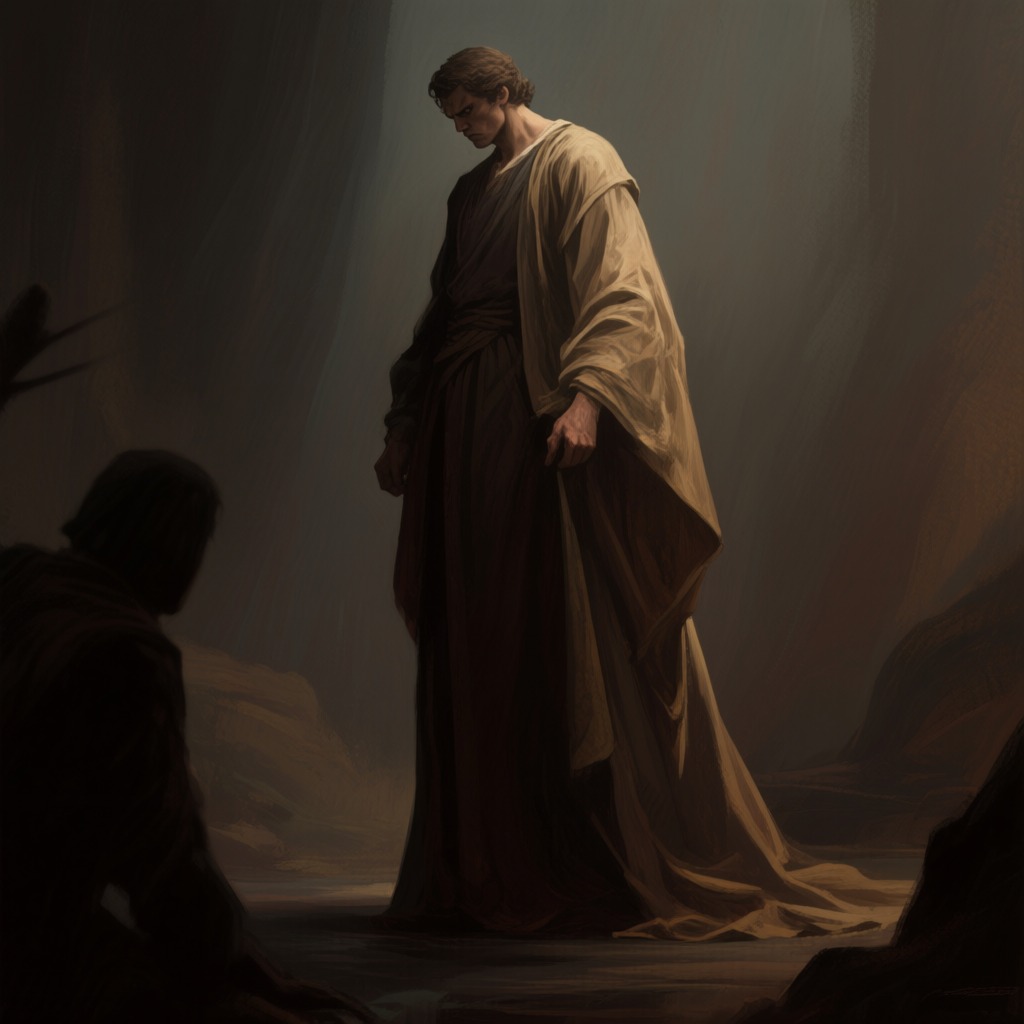
The kolba is the mud-and-straw hut on the outskirts of Gul Daman where Mariam lives for the first fifteen years of her life, built by her father Jalil and his sons as a remote prison for her mother Nana. It is the central space of Mariam's childhood, a site of isolation, maternal instruction, and longing for the father who visits only on Thursdays, and it becomes the place where Nana hangs herself after Mariam leaves for Herat. The kolba embodies the shame of Mariam's illegitimate birth and the confinement that defines her early existence, yet it also contains her only memories of love, from Mullah Faizullah's lessons to the weekly anticipation of Jalil's arrival.
Construction and Setting
Jalil and two of his sons, Farhad and Muhsin, built the kolba with sun-dried bricks plastered with mud and straw. It had two sleeping cots, a wooden table, two straight-backed chairs, a window, and shelves where Nana placed clay pots and her cherished Chinese tea set. Jalil added a cast-iron stove for winter, a tandoor for baking bread, a chicken coop, a few sheep with a feeding trough, and an outhouse dug a hundred yards outside the circle of willows. The kolba stood in a circular grove of weeping willow trees, reached by a rutted uphill dirt track that branched off the main road between Herat and Gul Daman, past a trout-filled stream that rolled down from the Safid-koh mountains. Nana bitterly called it a rathole, saying Jalil sounded like a warden bragging about his prison when he described it. Jalil could have hired laborers but built it himself, which Nana dismissed as "his idea of penance."
Life in the Kolba
Mariam's earliest memory is the sound of a wheelbarrow's squeaky iron wheels bouncing over rocks, bringing monthly rations of rice, flour, tea, sugar, cooking oil, soap, and toothpaste, pushed by two of her half brothers. Nana stood in the doorway, barefoot, her lazy eye narrowed, arms crossed, pockets filled with walnut-sized rocks, and yelled at the boys, calling them names and cursing their mothers. Mariam felt sorry for the tired boys but never dared wave back. In the mornings, she and Nana milked goats, fed hens, collected eggs, made bread together, and Nana taught her to sew, cook rice, and prepare various stews. The kolba had visitors: the village arbab Habib Khan, who brought gifts; the rotund old woman Bibi jo, who brought gossip; and, most importantly, Mullah Faizullah, the elderly Koran tutor who came once or twice a week to teach Mariam to read and recite the Koran. Mariam loved having visitors, but no one she longed to see more than Jalil, who visited every Thursday, throwing his jacket on the tandoor and catching her under the arms, tossing her up high.
The Kolba as a Space of Confinement and Longing
The kolba was the physical manifestation of Nana's exile and Mariam's illegitimacy. Nana had refused to live in Herat, wanting somewhere removed where neighbors would not stare at her pregnant belly, and Jalil was relieved to have her out of sight. Mariam's world was bounded by the kolba, the stream, and the clearing; she lived within walking distance of Herat for fifteen years but never saw its famous minarets up close, never picked fruit from its orchards, never strolled in its wheat fields. From a lookout on the edge of the clearing, she could see Herat spread below like a child's board game, and she envied the swallows that had flown over its mosques and bazaars. The kolba was where Mariam played her private game with pebbles, arranging them in columns for Jalil's legitimate children and adding a solitary eleventh pebble for herself. It was where she sat against a wall on Thursdays, eyes glued to the stream, waiting for Jalil, and where she held her breath as he left, counting seconds, pretending each second she did not breathe would grant her another day with him.
The Kolba and Nana's Suicide
The kolba is the site of Nana's suicide, which Mariam witnesses upon returning from her failed attempt to reach Jalil's house in Herat. After Mariam spent the night outside Jalil's gates, the driver brought her back, and as they crossed the stream, a gust of wind parted the drooping branches of the weeping willow like a curtain, revealing Nana dangling from a rope at the end of a high branch, the straight-backed chair overturned beneath her. After the funeral, Jalil walked Mariam to the kolba, collected a few of her things, put them in a suitcase, and took her to his house in Herat. The kolba was thus abandoned, its last inhabitant dead, its purpose as a place of punishment and isolation fulfilled.
The Kolba in Memory and Return
Years later, after Mariam's execution, Laila travels to Herat and visits the abandoned kolba. The lone windowpane is empty, the door is gone, and only half of a single rotting floorboard remains; the floor is carpeted with dry leaves, broken bottles, discarded wrappers, wild mushrooms, and weeds springing halfway up the walls. Laila sits with her back to the wall, closes her eyes, and summons Mariam's face: the soft radiance of her gaze, the long chin, the tight-lipped smile. In her imagination, the weeds recede, the spiderwebs unspin themselves, the floorboards return, and she sees a young Mariam sitting at the table making a doll by the glow of an oil lamp, her face smooth and youthful. Laila leaves the clearing, taking one last look at the kolba where Mariam slept, ate, dreamed, and held her breath for Jalil, and says good-bye. The kolba, once a prison, becomes in memory a place of origin and loss, the site of both Mariam's deepest suffering and her only childhood loves.
Thematic Significance
The kolba functions as a spatial symbol of the novel's central themes: the confinement of women, the shame of illegitimacy, and the longing for a world beyond reach. It is the physical counterpart to Nana's lesson that a woman's only skill is endurance, and it stands in stark contrast to the freedom Mariam imagines in Herat and later experiences in Kabul. The kolba is also a space of maternal inheritance: Nana's bitterness and Mariam's resilience are both forged within its mud walls. When Laila visits the ruined kolba, she completes a circuit of memory and mourning, recognizing that Mariam's spirit endures not in a grave but in the lives she touched. The kolba, ultimately, is not just a place but a condition—the condition of being a harami, an unwanted thing, yet also the condition of being loved, however imperfectly, by those who came to the clearing.